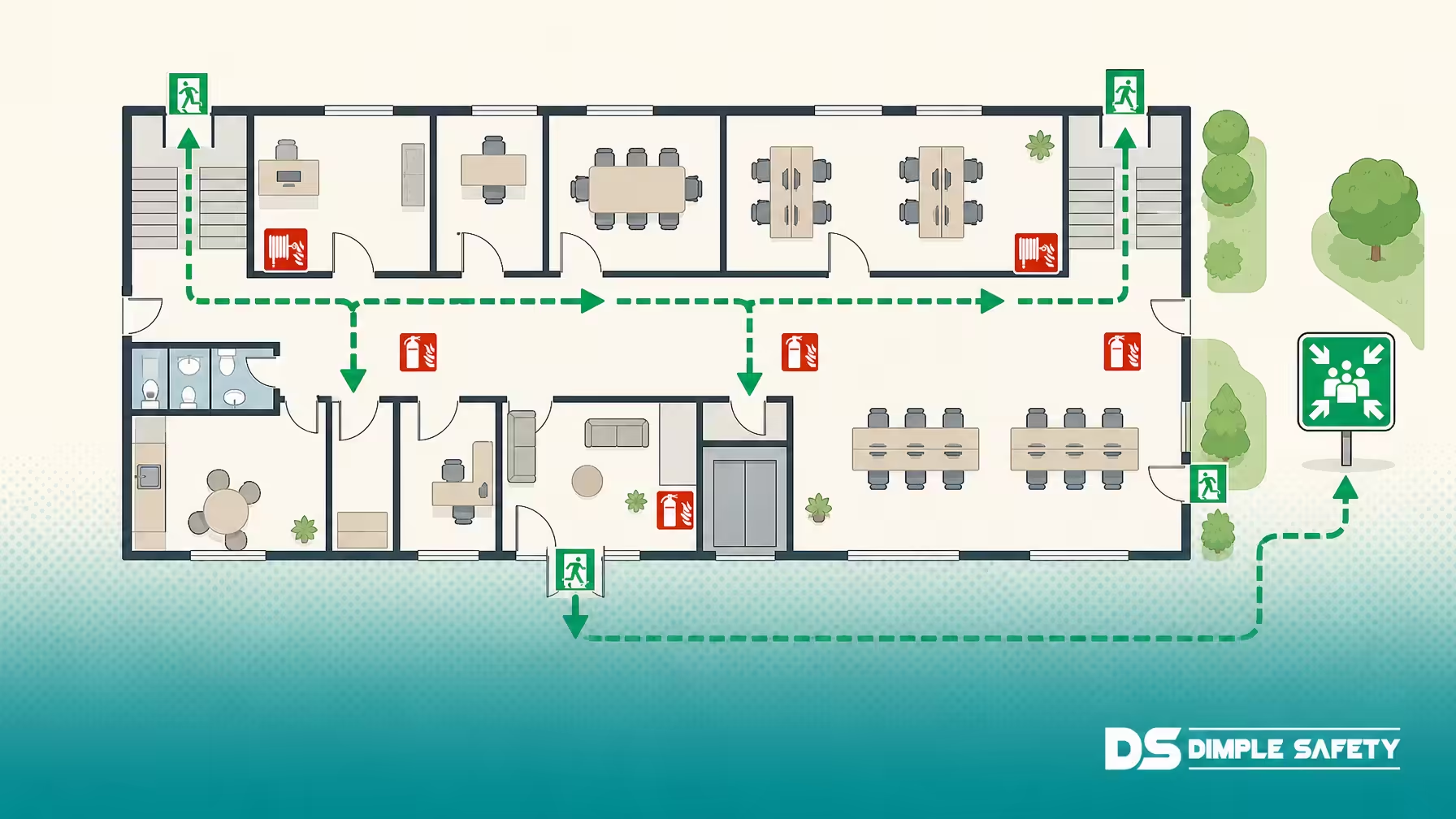
Schools are workplaces under South African law. The Occupational Health and Safety Act (OHS Act 85 of 1993) applies to every employer — including schools, universities, TVET colleges, and private educational institutions — regardless of the sector or whether the facility serves children or adults.
This guide covers the specific safety sign requirements for South African educational facilities, including schools, universities, and TVET colleges.
Does the OHS Act Apply to Schools?
Yes. The OHS Act applies to every employer with employees. A school principal or governing body is the employer of teachers, administrative staff, and support staff. The presence of learners on the premises also creates a duty of care that extends beyond the OHS Act to the South African Schools Act and common law.
The Department of Employment and Labour conducts OHS Act inspections at schools. In 2024, the Department closed seven mobile classrooms at a Limpopo school for OHS Act non-compliance — including missing fire equipment and inadequate signage.
General School Safety Signage Requirements
Every educational facility requires the following as a baseline:
Emergency Exit Signs (Green Rectangle)
- Above every emergency exit door and at every junction on the evacuation route
- Visible from every occupied room — classrooms, offices, staffrooms, halls
- Photoluminescent (glow-in-the-dark) versions in enclosed corridors and stairwells
Fire Equipment Signs (Red Rectangle)
- Above every fire extinguisher — with extinguisher backing board
- Above every fire hose reel (where present)
- At every fire alarm call point / break-glass station
Assembly Point Sign (Green Rectangle)
- At the designated external assembly area — typically the school field or a marked area away from buildings
- Must be visible from the building exits
No Smoking Signs (Prohibition — Red Circle)
- In all indoor areas, staffrooms, and covered walkways
- Compulsory under both the OHS Act and the Tobacco Products Control Amendment Act
Science Laboratory Safety Signs
Laboratories are the highest-risk area in most schools. Required signs:
- Corrosive substance warning (yellow triangle) — at the chemical storage cupboard
- Flammable materials warning (yellow triangle) — at any flammable chemical storage
- Eye protection required (blue circle) — at the laboratory entrance
- Gloves required (blue circle) — in areas where corrosive or irritant chemicals are handled
- No food or drink (prohibition) — standard laboratory prohibition
- Eyewash station sign (green rectangle) — at the emergency eyewash point
- First aid sign (green rectangle) — at the first aid kit location
Key rule: Chemical storage cupboards must display the specific hazard sign for each class of chemical stored.
Woodwork and Technical Rooms
- Rotating machinery warning (yellow triangle) — at all lathes, saws, and drill presses
- Eye protection required (blue circle) — at room entry
- Hearing protection required (blue circle) — in rooms where noise exposure exceeds 85dB
- No loose clothing / remove jewellery (prohibition) — near rotating equipment
- Dust hazard warning (yellow triangle) — in rooms with sawdust generation
Kitchen and Food Technology Rooms
- Hot surface warning (yellow triangle)
- Fire blanket location sign (red rectangle) — above the fire blanket
- CO2 or dry powder fire extinguisher location sign — appropriate to the kitchen fire risks
- Wash hands (blue mandatory) — at hand-washing stations
- No smoking / no open flame (prohibition)
Sports Facilities and Swimming Pools
- Swimming pool depth markers — depth at each end and at any abrupt depth change
- No diving (prohibition) — in shallow areas
- Pool safety equipment sign — indicating location of reaching pole and flotation ring
- First aid sign — at the first aid station
First Aid and Medical Room
- First aid sign (green rectangle with white cross) — visible from corridors and outside the room
- Eyewash station sign — if an eyewash station is present
- Defibrillator sign — if an AED (automated external defibrillator) is present
Common School OHS Compliance Gaps
- No fire equipment signs — fire extinguishers present but unsigned and without backing boards
- No laboratory safety signs — chemical cupboards unsigned
- Missing emergency exit signs — corridors without directional arrows
- No assembly point sign — the assembly point is known but not formally signed
- Broken or expired fire extinguishers — service tags expired
Required Safety Signs by School Area
| Area | Required Sign Types | Governing Standard |
|---|---|---|
| Main entrance | No smoking, emergency exit directional, visitor reporting mandatory sign | OHS Act; Tobacco Products Control Amendment Act |
| Classrooms | Emergency exit directional arrows, fire extinguisher location sign (where extinguisher is present) | OHS Act General Safety Regulations; SANS 10400-T |
| Laboratories / workshops | Corrosive, flammable and toxic chemical warnings; eye protection, glove and hearing protection mandatory; no food or drink; first aid; eyewash station | OHS Act; SANS 1186; SANS 10234 |
| Corridors | Emergency exit directional arrows at every junction; maximum 30m gap between signs on long corridors | SANS 10400-T; SANS 1186 |
| Stairwells | Emergency exit sign per floor; photoluminescent signs mandatory in enclosed stairwells | SANS 10400-T |
| Kitchen / canteen | Hot surface warning, fire blanket location, CO2 or dry powder extinguisher location, wash hands mandatory, no smoking | OHS Act; SANS 1186; Health Act |
| Sports fields | First aid location sign, no diving (where pool present), pool depth markers, pool safety equipment sign | OHS Act; SANS 10400-T |
| Parking | Speed limit, pedestrian crossing, no entry or one-way signs where applicable | National Road Traffic Act; OHS Act |
Frequently Asked Questions
Are safety signs legally required in South African schools?▼
Yes. The OHS Act 85 of 1993 applies to schools as employers. School principals and governing bodies are required to provide a safe working environment, which includes compliant safety signage. Emergency exit signs, fire equipment signs, and hazard warnings in laboratories and workshops are all mandatory. Failure to comply can result in a compliance notice, closure order, or personal liability for the principal or the governing body member responsible for OHS.
What safety signs must a school laboratory have?▼
A school laboratory must display warning signs for the chemical classes stored (corrosive, flammable, or toxic as applicable), mandatory PPE signs at the entrance (eye protection and gloves at minimum), a no food or drink prohibition sign, a first aid sign at the first aid kit, and an eyewash station sign where an eyewash point is installed. Chemical storage cupboards must carry the specific hazard class sign for each chemical type stored. All signs must be SANS 1186 compliant.
Who is responsible for safety signage in government schools in South Africa?▼
In government schools, responsibility is shared between the School Governing Body (SGB) and the provincial Department of Education. The SGB is the employer of staff appointed from SGB funds and carries OHS Act duties for the workplace it controls. The provincial department, as the employer of departmentally appointed staff, also holds obligations. In practice, the principal is the designated OHS representative and is accountable for day-to-day compliance, including signage.
What fire safety equipment and signs does a school need?▼
Every school must have serviceable fire extinguishers appropriate to the fire risk of each area — CO2 for laboratories and server rooms, dry powder or foam for general areas, and CO2 or dry powder for kitchens. Each extinguisher must be signed with a SANS 1186 fire equipment location sign and a backing board. Break-glass alarm call points must be labelled. The school must have an assembly point sign at the external gathering area and an emergency evacuation plan posted on every floor of every building.
Do school sports fields need safety signage?▼
Yes. Where a swimming pool is present, SANS 10400-T and the OHS Act require depth markers at both ends and at any abrupt depth change, a no diving sign in shallow areas, and a pool safety equipment sign indicating the location of the reaching pole and flotation ring. A first aid sign must be posted at the first aid station near the sports facilities. Even without a pool, schools must post a first aid sign at the first aid kit location on the sports grounds.
What happens if a school fails a safety compliance inspection?▼
An OHS Act inspector from the Department of Employment and Labour can issue a compliance notice requiring corrective action within a set timeframe, issue a prohibition notice stopping use of a specific area (as occurred with classrooms in Limpopo in 2024), or refer the matter for prosecution. Fines of up to R50,000 or imprisonment of up to two years may apply for serious non-compliance under Section 38 of the OHS Act. Personal liability can fall on the principal or the governing body member designated as responsible for OHS.
Where can I buy safety signs for schools in Johannesburg?▼
Dimple Safety, at 22 Fraser Street, KAJ Park, Unit 8, Booysens, Johannesburg, stocks the full range of SANS 1186-compliant safety signs for schools — including laboratory warning signs, mandatory PPE signs, emergency exit signs, fire equipment location signs, and assembly point signs. Same-day collection is available Monday to Friday, 08:30 to 16:00. WhatsApp your school’s sign list to 061 582 8943 for a same-day quote, or visit dimplesafety.co.za to view the full catalogue.
Where to Order School Safety Signs
Dimple Safety supplies SANS 1186-compliant safety signs for schools and educational facilities from our Booysens, Johannesburg warehouse. We can provide itemised quotes for full-campus signage.
📞 WhatsApp your request: wa.me/27615828943
🌐 dimplesafety.co.za | 📍 22 Fraser Street, Booysens, Johannesburg
Also see: SANS 1186: The South African Standard for Workplace Safety Signs Explained